When Is It Time for 24-Hour Care at Home?

Seven specific safety and care-need thresholds signal when partial-day care isn't enough — and what to do in the week after that realization.

Sarah Mitchell, RN, BSN

24/7 Care Coordinator

Reviewed by Carol Bradley Bursack, NCCDP-certified — Owner of Minding Our Elders

4 min read

·

Updated May 13, 2026

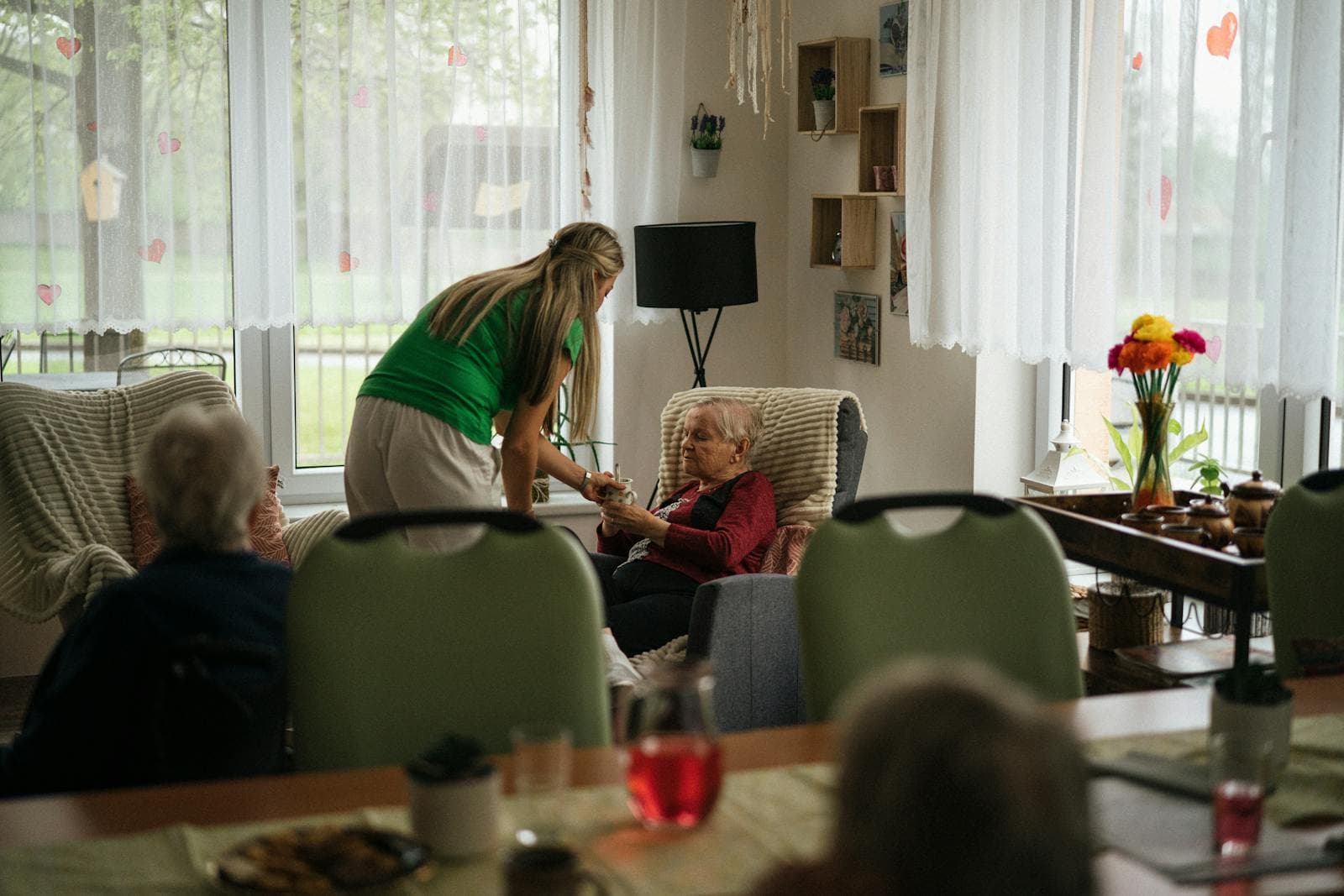
A caregiver assists elderly women with tea — afternoon care shift in 24-hour home care.

The clearest signal that 24-hour home care is needed is when your parent can no longer be safely alone for any meaningful stretch of the day — wandering risk, fall risk, fire risk, or sundowning-related agitation that requires constant redirection. Most families recognize the moment when it arrives: a safety incident, a fall at 3 AM, a medication mistake with consequences. The decision then becomes whether to escalate to 24-hour care at home or transition to a facility.

This guide walks through the seven signals that 24-hour care is needed and what to do in the week after that realization. For the math and staffing models, see our companion guides on live-in vs 24/7 awake care and how much 24-hour home care costs.

1. Falls at night

The biggest single trigger. An overnight fall — even one that doesn’t result in injury — signals that your parent can’t be alone overnight safely. According to the Centers for Disease Control and Prevention, falls are the leading cause of fatal and nonfatal injuries among older adults, with one in four adults aged 65 and older falling each year.

Once an overnight fall happens, families typically have three options: 24-hour care at home, transition to assisted living or memory care, or a higher-supervision arrangement (live-with-family). Continuing to leave the senior alone at night isn’t a safe option after the first fall.

2. Wandering or elopement

Dementia-related wandering — leaving the home and not returning safely — is one of the most dangerous patterns in home care. Even one elopement incident triggers the 24-hour decision. Wandering during the day might be managed with shift care; wandering overnight (the most dangerous time, often related to sundowning) requires 24-hour awake supervision.

What it looks like

  • Leaving the house in inappropriate clothing
  • Going out at odd hours (3 AM)
  • Getting lost on the way back from a familiar destination
  • Being found by neighbors or police far from home

3. Medication mistakes with consequences

Forgetting medications occasionally is one issue; double-dosing, mixing up morning and evening medications, or missing critical medications (insulin, blood thinners, heart medications) becomes a different category of risk. Pill organizers and reminder apps work for early-stage cognitive change; advanced dementia or cognitive impairment with consequence-impairing medications often requires medication oversight more substantial than a daily check-in.

4. Skin breakdown or hygiene incidents

Pressure sores, urinary tract infections from poor hygiene, or unbathed presentations during family visits all signal that your parent is no longer maintaining baseline hygiene independently. When daily personal care (bathing, toileting) requires assistance, hours-a-week care often becomes insufficient and 24-hour staffing — or facility transition — becomes necessary.

5. Severe sundowning or sleep-cycle inversion

Sundowning that escalates into hours of evening agitation — pacing, calling out, attempting to leave — exhausts spouse caregivers and requires trained intervention. Sleep-cycle inversion (asleep during the day, awake all night) is a hard pattern to manage at home without 24-hour staffing. See our memory care guide for managing sundowning if you’re earlier on this trajectory; if it’s already overwhelming, 24-hour staffing is often the right next step.

6. Post-hospital discharge with complications

Complicated discharges — stroke, sepsis, major surgery, dementia decline — sometimes require 24-hour care for the first 2 to 8 weeks home. This is the most common temporary use of 24-hour care. The arrangement scales back to partial-day care once the senior stabilizes. Medicare-funded home health (RN visits, PT, OT) layers on top of the 24-hour staffing for the medical recovery work.

7. Family caregiver burnout

The most underrecognized trigger. When the primary family caregiver — typically a spouse or adult child — begins to show signs of chronic sleep deprivation, social withdrawal, health symptoms of their own, or resentment they can’t say out loud, the family system is breaking. At that point, the family caregiver’s wellbeing is itself a 24-hour care consideration. Continuing to push without paid round-the-clock support often produces a worse outcome for the senior, not a better one.

What to do in the week after the realization

Once you’ve identified one or more of the seven signals, the first 7 days matter. A practical sequence:

  1. Day 1 — Immediate safety. If overnight safety is the issue, arrange for a family member to stay overnight or hire 1 to 3 overnight aide shifts while you plan the longer arrangement.
  2. Day 2 to 3 — Assess. Schedule a geriatric care manager assessment ($300 to $500) for an objective view of the care needs, a 12-month trajectory, and cost projections.
  3. Day 4 to 5 — Compare options. Interview 2 to 3 home care agencies. Tour 1 to 2 memory care or assisted living facilities. Get written quotes from each.
  4. Day 6 — Decide and align. Family meeting (in person or video) to align on the decision. Include the senior if cognitively able. Geriatric care manager can facilitate.
  5. Day 7 — Start. First day of 24-hour staffing or first day of facility placement.

What’s the next step?

If you’re recognizing the signals and not sure what to do, a free 30-minute call with a 24-hour care coordinator will help you think through whether home care at this level is feasible for your family. Talk to a 24HomeCareNearMe advisor when you’re ready.

Frequently asked questions

Can I wait to see if things get better before starting 24-hour care?

+

Sometimes, with caveats. If the trigger is a single isolated incident with a treatable cause (UTI, medication reaction, dehydration), waiting after the medical issue is resolved is reasonable. If the trigger is dementia progression, post-stroke decline, or chronic frailty, waiting typically leads to a worse crisis — a second fall, a hospitalization, or an emergency placement. The pattern matters more than any single event.

What if my parent refuses 24-hour care?

+

It's the most common obstacle. The reframe that often works: position the 24-hour care as your need ('I'd worry less knowing someone's there overnight') rather than their deficit. Start with a 2-week trial. Use a trusted family member or physician to deliver the conversation if you're getting nowhere yourself. If your parent has full decision-making capacity and refuses, you may need to accept the risk; if capacity is impaired, family decision-making applies.

Is 24-hour care a long-term solution or a bridge?

+

Both, depending on the situation. Post-hospital discharge: typically a 2 to 8 week bridge until stable. Advanced dementia: can be sustained for years if the family budget allows, often transitioning to memory care facility eventually. Hospice: continues through end-of-life. Post-stroke: often a 3 to 12 month arc with rehabilitation. The realistic question is what 6-month and 12-month trajectories look like; a geriatric care manager will model both.

How do I know if my parent needs awake care or live-in is sufficient?

+

Three questions: (1) Does your parent need help during the night (toileting, repositioning, medication, monitoring)? If yes, awake care. (2) Are they at risk of wandering, fire, or getting hurt overnight? If yes, awake care. (3) Do they reliably sleep through the night? If yes, live-in is sufficient. Many families start at 24/7 awake during stabilization and step down to live-in when overnight needs reduce.

What happens if our 24-hour caregiver gets sick?

+

Reputable agencies have a pool of trained backup caregivers and will call you within 30 minutes with a replacement name and arrival time. Ask agencies explicitly: 'What's your protocol when a caregiver calls out, and how often do you fail to find a backup?' Agencies that hedge or describe vague 'best efforts' aren't ready for 24-hour work — and uncovered shifts in 24-hour care are dangerous, not inconvenient.

Share this article

About the author

Sarah Mitchell, RN, BSN

24/7 Care Coordinator

Sarah is a registered nurse who has spent a decade staffing 24-hour and live-in home care teams for medically complex seniors. She writes about the realities of round-the-clock care — staffing models, overnight safety, post-discharge transitions, and how to know when 'a few hours a week' has become 'we need someone in the house all the time.'

View full bio

Related articles

A caregiver speaks with an elderly woman in a wheelchair — the kind of attention 24-hour home care provides.

Choosing a 24-Hour Caregiver in Virginia Beach: Local Questions to Ask

Twelve specific questions surface the right 24-hour care agency in Virginia Beach fast — licensing, supervision, consistency, and Virginia-specific issues.

Sarah Mitchell

  • Aging in Place
  • Choosing a Provider
A caregiver assists elderly women with tea — afternoon care shift in 24-hour home care.

Virginia Beach Family Caregiver Resources for Round-the-Clock Support

Resources for Virginia Beach family caregivers managing round-the-clock home care — emotional support, financial help, respite, and burnout prevention.

Sarah Mitchell

  • Aging in Place
  • Family Caregivers
A caregiver prepares a warm drink for a senior — a quiet moment in continuous home care.

Post-Hospital 24-Hour Care in Virginia Beach

Round-the-clock home care for the first weeks after Virginia Beach-area hospital discharge — when complications are most likely and family can't be there 24/7.

Sarah Mitchell

  • Aging in Place
  • Paying for Care
A caregiver interacts warmly with an elderly resident — daytime shift in 24-hour home care.

Best Home Health Agencies in Virginia Beach for 24/7 Care

Selecting a Virginia Beach-area home health agency for 24-hour care — licensing, RN supervision, consistency, and the questions that matter most.

Sarah Mitchell

  • Aging in Place
  • Choosing a Provider
A caregiver assists a senior using a walker in a care setting — typical 24-hour home care moment.

Virginia Medicaid 24-Hour Coverage in Virginia Beach

Virginia Medicaid covers limited 24-hour home care for income-eligible Virginia Beach seniors through Virginia's Commonwealth Coordinated Care Plus (CCC Plus) waiver — here's how to qualify.

Sarah Mitchell

  • Aging in Place
  • Paying for Care
A senior woman in an armchair at home with her caretaker nearby — the scene of round-the-clock home care.

Virginia Licensing for 24-Hour Caregivers in Virginia Beach

Virginia's home care licensing rules determine which Virginia Beach 24-hour care providers can legally operate — here's what matters.

Sarah Mitchell

  • Aging in Place
  • Choosing a Provider
A caregiver speaks with an elderly woman in a wheelchair — the kind of attention 24-hour home care provides.

Overnight Home Care in Virginia Beach

Overnight shifts cover the night-fall and confusion problems that destroy aging-in-place plans in Virginia Beach — at far lower cost than 24/7 staffing.

Sarah Mitchell

  • Aging in Place
  • Paying for Care
A caregiver assists elderly women with tea — afternoon care shift in 24-hour home care.

Live-In Caregivers Available in Virginia Beach, VA

Live-in caregivers serving Virginia Beach — one trained caregiver in the home 24 hours, with consistency, cost, and what to ask before signing.

Sarah Mitchell

  • Aging in Place
  • Choosing a Provider
A caregiver prepares a warm drink for a senior — a quiet moment in continuous home care.

Cost of 24-Hour Home Care in Virginia Beach in 2026

Virginia Beach-specific 2026 pricing: live-in, awake shifts, overnight only — plus the four funding paths most families combine.

Sarah Mitchell

  • Aging in Place
  • Paying for Care
A caregiver interacts warmly with an elderly resident — daytime shift in 24-hour home care.

24-Hour Home Care in Virginia Beach, VA: What to Expect

Round-the-clock home care in Virginia Beach, Virginia — live-in, awake shifts, post-hospital coverage — for families navigating complex care needs.

Sarah Mitchell

  • Aging in Place
  • Paying for Care
A caregiver assists a senior using a walker in a care setting — typical 24-hour home care moment.

What Is 24-Hour Home Care? A Complete Guide

24-hour care brings continuous in-home support around the clock — live-in, awake shifts, overnight only — for seniors who need a constant presence.

Sarah Mitchell

  • Aging in Place
  • Paying for Care
A caregiver prepares a warm drink for a senior — a quiet moment in continuous home care.

How Much Does 24-Hour Home Care Cost in 2026?

Live-in care: $300–$450 a day. 24/7 awake care: $18,000–$26,000 a month. The real cost depends on six factors that move the price 30 to 50 percent.

Sarah Mitchell

  • Aging in Place
  • Paying for Care
A caregiver speaks with an elderly woman in a wheelchair — the kind of attention 24-hour home care provides.

Overnight Home Care: Safety, Costs, and What to Expect

Overnight shifts solve the night-fall and confusion problems that destroy aging-in-place plans — without the cost of full 24-hour staffing.

Sarah Mitchell

  • Aging in Place
  • Paying for Care
A caregiver interacts warmly with an elderly resident — daytime shift in 24-hour home care.

Live-In vs Shift vs 24/7 Awake Care: Which Do You Need?

Three staffing models — live-in, shift, and 24/7 awake — solve different problems. Picking the wrong one costs thousands a month.

Sarah Mitchell

  • Choosing a Provider
  • Paying for Care
When to Start 24-Hour Home Care | 24HomeCareNearMe.com